


Black Walnut
Black Walnut
Couldn't load pickup availability
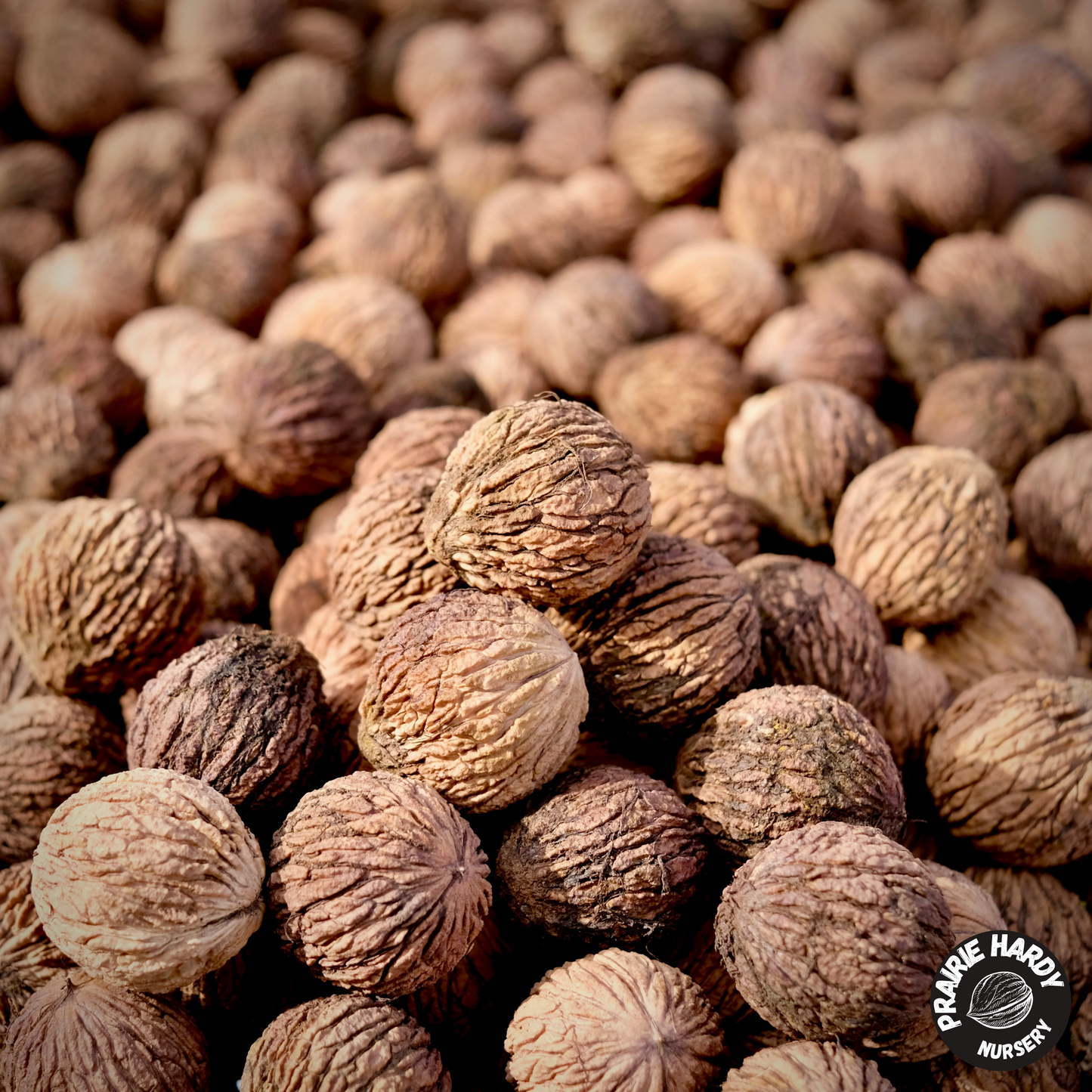
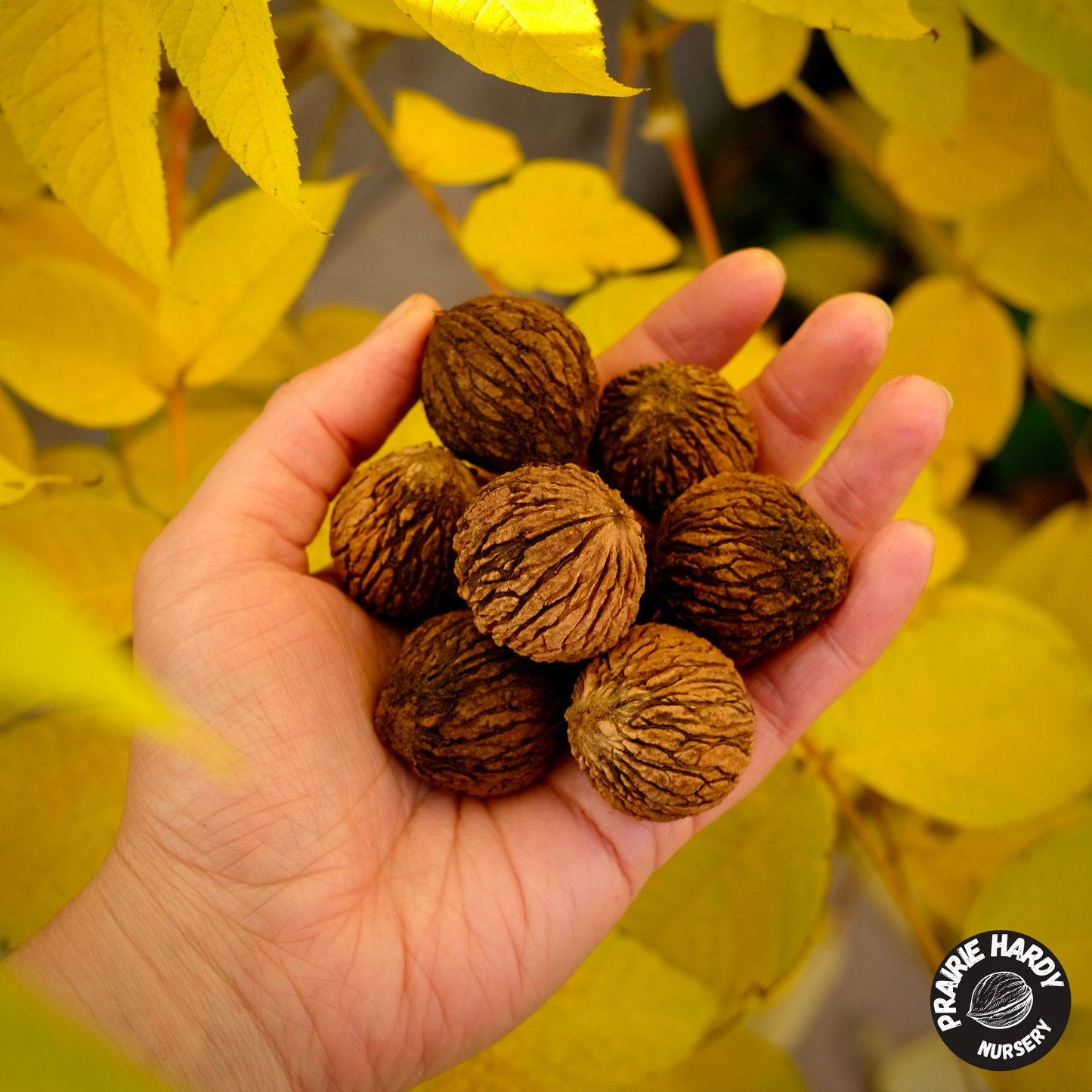
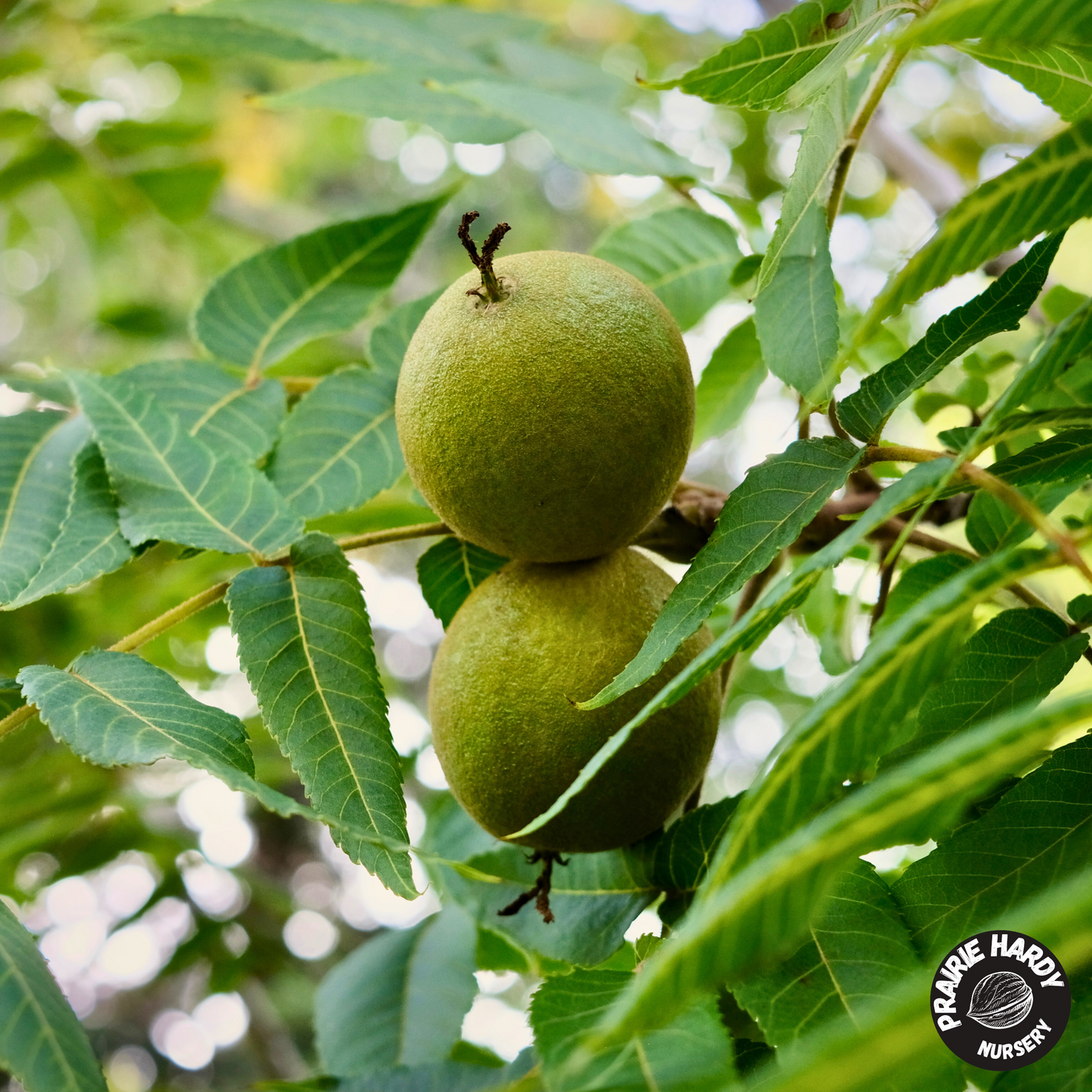
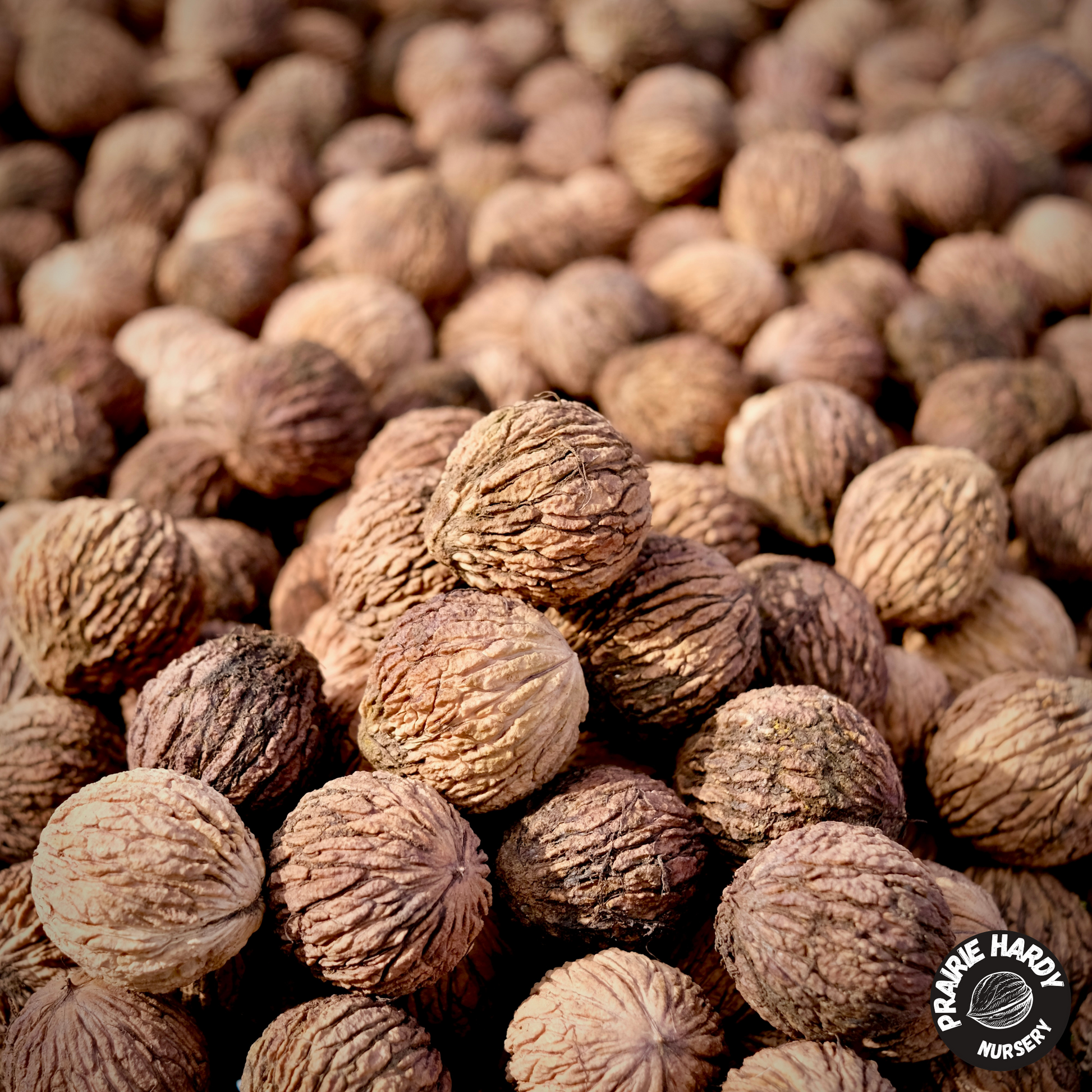
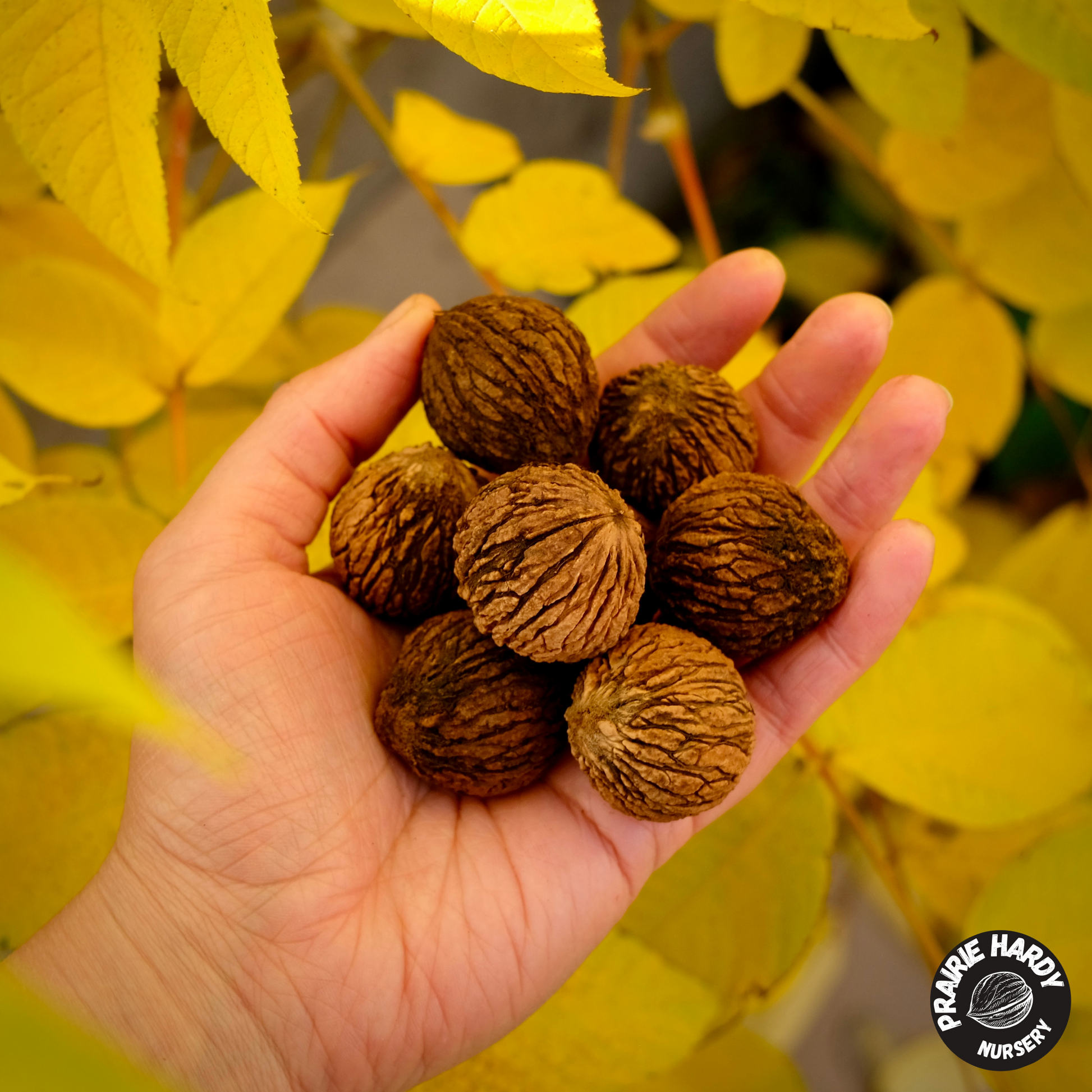
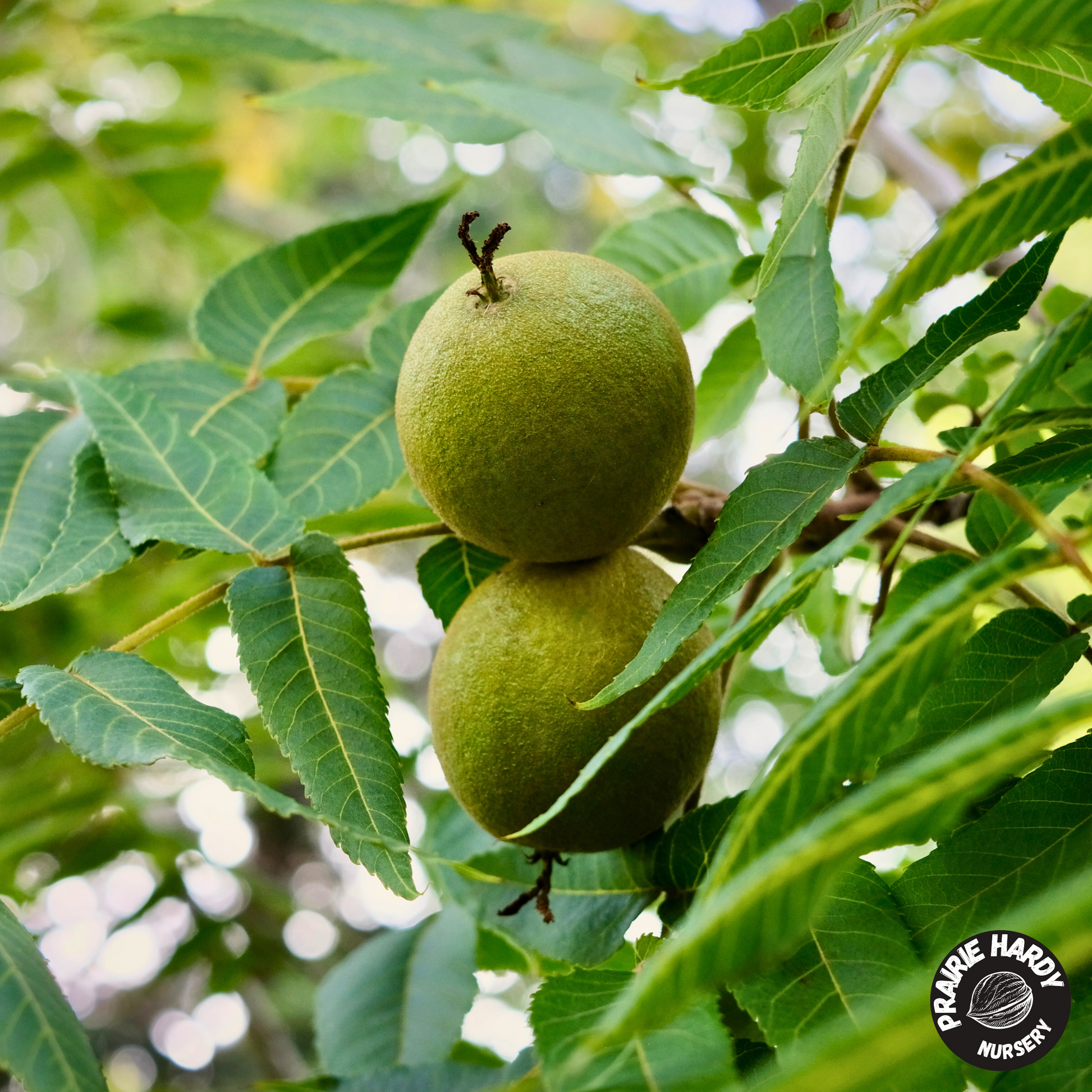
Black walnuts are deliciously flavourful, featuring a sweet, spicy kernel with a rich, aromatic tone. They are popular in cooking and equally enjoyable raw or roasted. The nuts have thick shells and require a bit of extra strength to crack open. Harvest typically occurs around mid-October, when the nuts naturally drop from the tree. Black walnut trees begin producing walnuts at approximately ten years of age. While still green, the husks give off a pleasant citrus scent.
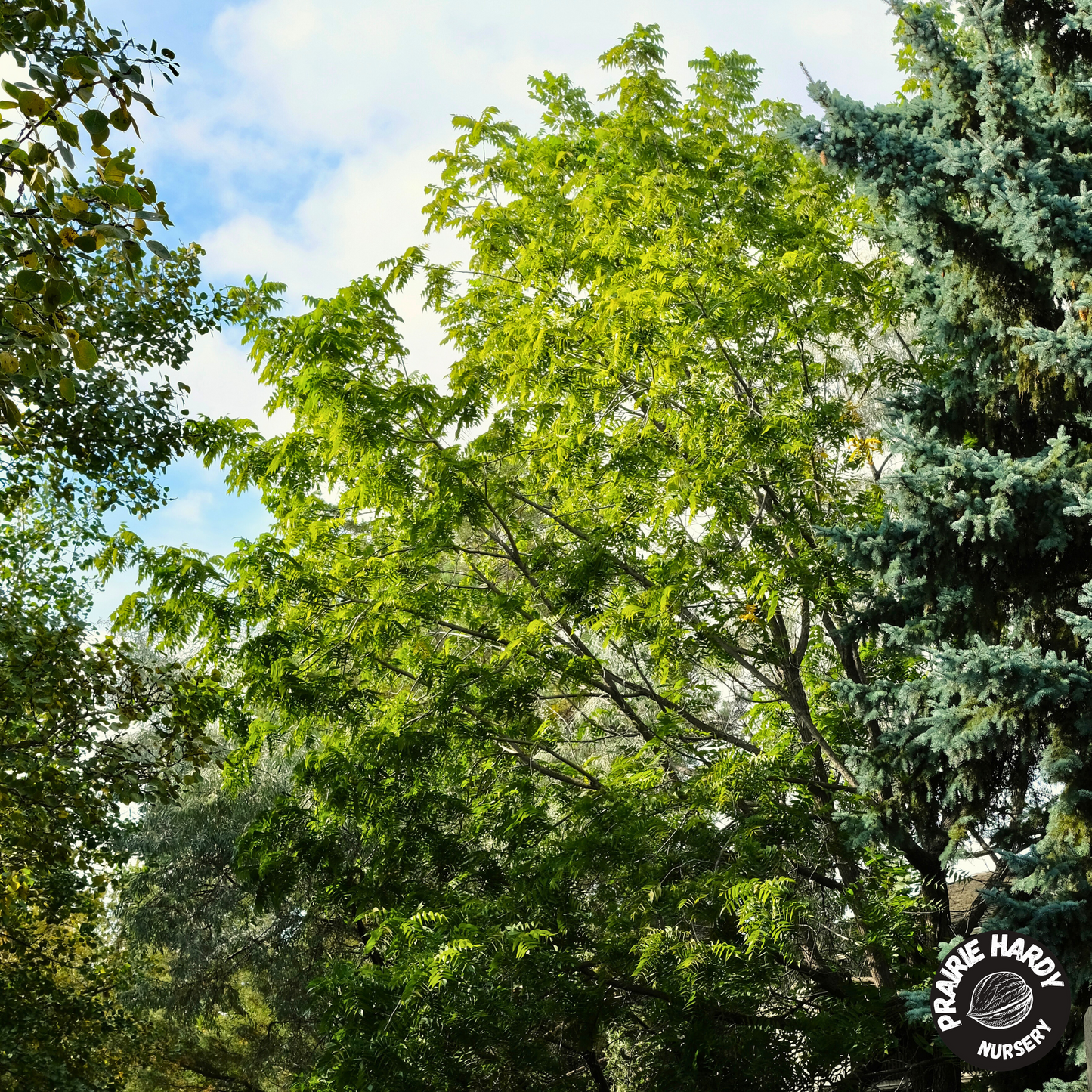
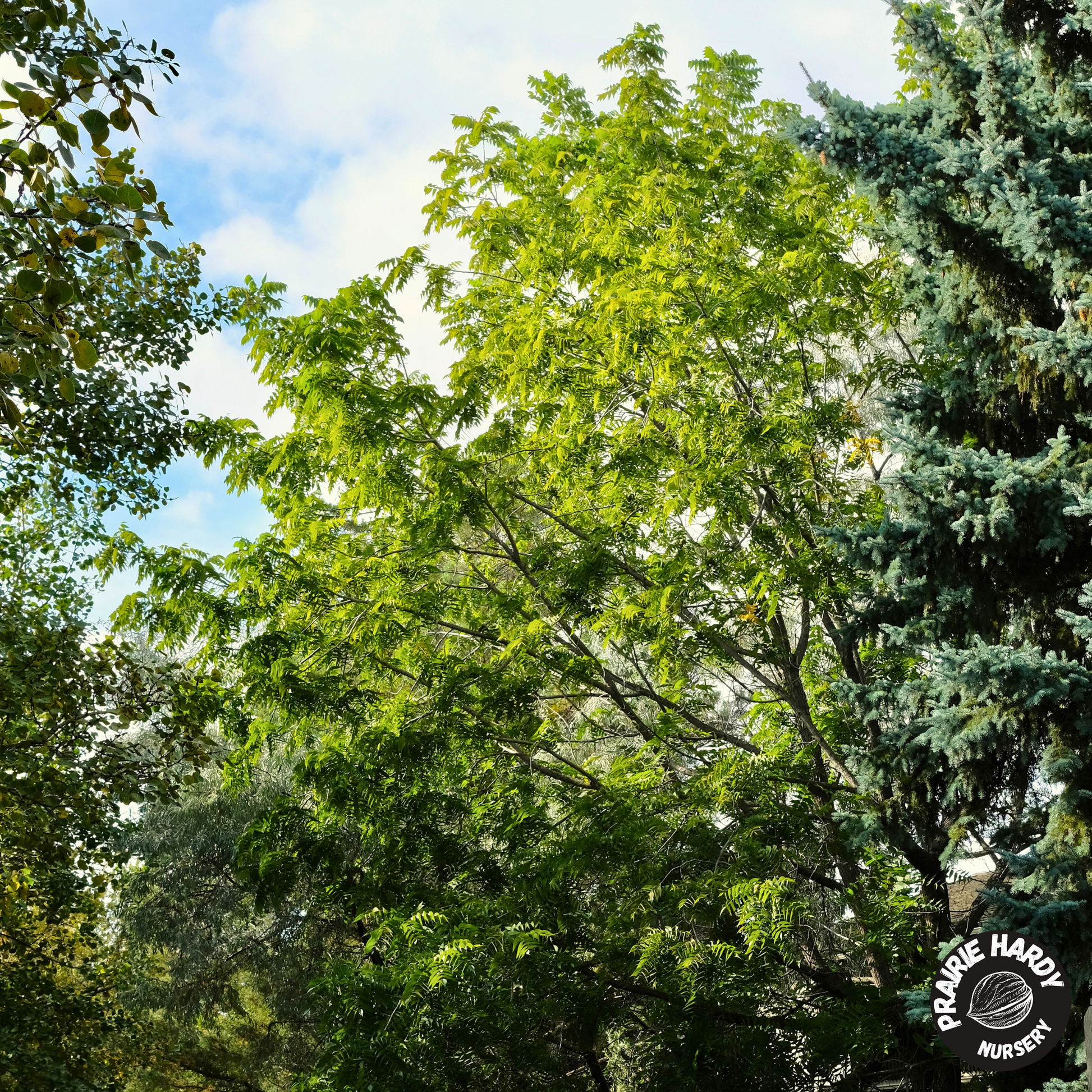
Black walnut is a majestic, long-lived hardwood tree native to eastern Canada. It is highly valued for both its timber and medicinal properties. Some of the earliest records of black walnut plantings on the Prairies date back to 1918 in Morden, Manitoba. The trees grew exceptionally well, leading to efforts to distribute and plant them more widely, and eventually black walnuts made their way westward.
These are seedlings from productive Canadian Prairie (zone 3) sourced trees.
Growers Note: Planting location is important, so choose your planting site wisely. Black walnuts have the best success growing in sheltered yard sites or urban locations (micro-climate). In colder climates such as Zone 2, you can expect winter injury and difficulty producing nuts. It’s a slow-growing tree and also slower to break dormancy in the spring.
Black Walnut trees produce a substance named juglone which occurs naturally in all parts of the tree, especially in the leaves, nut hulls, and roots. Choose your planting site wisely as it can inhibit the growth of blueberry, apple tree, crabapple, cotoneaster, azalea, rhododendron, lilac, white birch, larch, mugo pine, red pine, white pine, Norway spruce, silver maple, potato, tomato, pepper and eggplant.
Hardiness Zone: 3b/4 - see grower's note
Height at Maturity: 13 meters (45 feet)
Spread: 9 meters (30 feet)
Soil Preference: Well drained, rich deep soil
Light Exposure: Full sun
Pollination: Self-fertile (Plant two of each for best pollination)
Latin Name: Juglans Nigra
Share